
Op-Ed: When a Nobel Peace Prize winner urged moving Gaza’s Arabs to Jordan
This month marks one year since President Trump presented his idea during a White House press conference that Gaza’s population be relocated to “a good, fresh, beautiful piece of land” in another country.
By Moshe Phillips
Ever since taking office for his second term, President Donald Trump has regularly spoken about the Nobel Peace Prize, and this month marks one year since President Trump presented his idea during a White House press conference that Gaza’s population be relocated to “a good, fresh, beautiful piece of land” in another country.
The two items are far more connected than may be obvious.
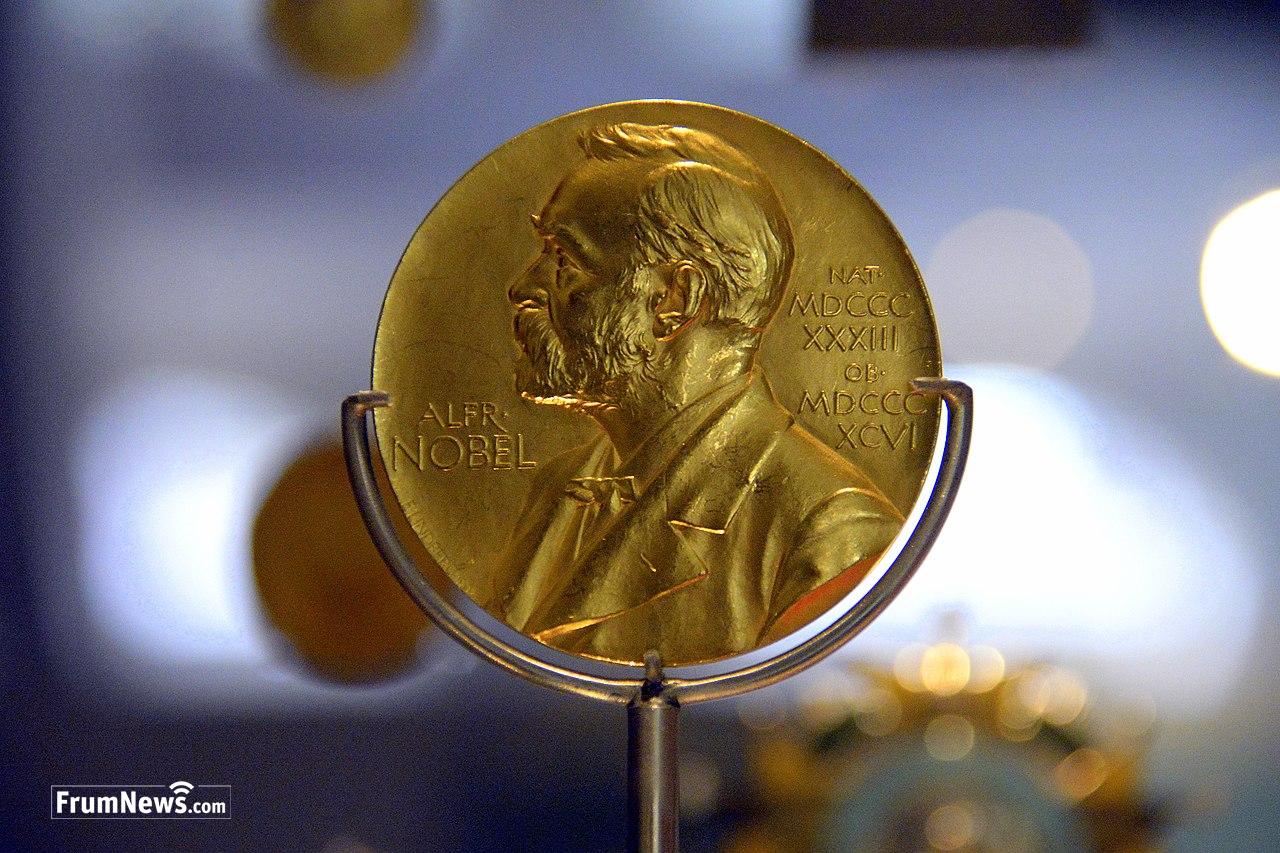
“I feel very differently about Gaza than a lot of people,” explained President Trump as he outlined his relocation idea. While it may be true that “a lot of people” disagree, President Trump was expressing the same idea that Israeli Prime Minister and Nobel Peace Prize winner Yitzhak Rabin once proposed.
In 1973, Rabin, a former chief of staff of the Israeli army, was serving as Israel’s ambassador in Washington. In an interview published in the Israeli daily Maariv on February 16, Rabin discussed the question of what should be done about the large number of Palestinian Arab refugees residing in Gaza. Much of Gaza’s population consisted of Arabs who had settled there during the 1948 War of Independence and their descendants. Rabin said: “The problem of the refugees of the Gaza Strip should not be solved in Gaza or el-Arish [in the Sinai] but mainly in the East Bank”—meaning the Kingdom of Jordan.
Rabin continued: “I want to create conditions such that during the next 10 or 20 years, there will be a natural movement of population to the East Bank. We can achieve that, in my opinion, with [King] Hussein and not with Yasser Arafat.” As far as I know, Rabin never backtracked on that comment.
He was not a “racist,” “fascist,” advocate of “ethnic cleansing,” or any of the other harsh names now being hurled at Trump. The future prime minister and Nobel Peace Prize laureate was simply taking a long, hard look at a difficult problem and proposing what he considered to be a practical solution.
The heart of the problem facing Rabin was that when Egypt illegally occupied Gaza from 1948 to 1967, it refused to absorb the refugees into the Egyptian population. The Egyptian government kept the Gazans impoverished and kept separate, languishing in shanty towns and refugee camps administered by the United Nations. What’s more, Egypt sponsored Gaza-based terrorist groups, known as fedayeen, to attack Israel.
During Egypt’s rule in Gaza, the United Nations set up schools run by the UN Relief and Works Agency for Palestine Refugees in the Near East—the same morally bankrupt UNRWA that Israel has only very recently taken action against. In UNRWA schools, young Gazans were educated to hate Jews and Israel and to glorify Arab terrorism.
Following the 1967 war, Israel found itself dealing with all these hate-filled Gazans. So unless something was done to change the situation, Israel would continue to face constant terrorist attacks from Gaza.
And that’s exactly what happened. Nobody listened to Rabin’s 1973 advice to move the Gazans to Jordan. The Gazans stayed in Gaza, launched constant terrorist attacks on Israel, and eventually voted Hamas into power in 2007. The horrors of October 7, 2023, followed.
It made perfect sense for Rabin to think of Jordan as the destination for the Gazans. After all, Palestinian Arabs who settled in Gaza and those who settled in Jordan are indistinguishable. They have the same history, culture, language, and religion.
The problem, though, is that Jordan’s King Hussein had lost patience with them. For years, Hussein let the PLO set up its bases on Jordanian territory. Hussein was fine with the PLO attacking Israel. But some of Arafat’s terrorists began talking about how Jordan really was Palestine. Hussein became concerned that the PLO would try to overthrow him.
The PLO terrorist army was also causing Jordan problems in the international arena by repeatedly hijacking planes, forcing them to land in Jordan, and then holding the passengers hostage while demanding to trade them for imprisoned terrorists. Some things never change, it seems.
How did King Hussein solve the problem? He kicked them out. In the autumn of 1970, the King of Jordan forcibly relocated more than 2,000 PLO terrorists, including their entire leadership, to Syria. From there, they continued into Lebanon, where they soon plunged that country into years of chaos, civil war, and bloodshed.
Understandably, the current king, Hussein’s son Abdullah, may not be too keen on welcoming in Gazans. Or, on the other hand, he might decide to exclude terrorists while welcoming ordinary Gazans—in the same manner that Jordan took in so many refugees from the bloody Syrian civil war.
It remains to be seen if the Board of Peace moves forward with the relocation ideas of Trump and Rabin. If they don’t, what will stop history from repeating itself?
Moshe Phillips is national chairman of Americans For A Safe Israel (AFSI, www.AFSI.org), a leading pro-Israel advocacy and education organization.

Read Next trending_flat


 Opinion
Post the first comment!